
Filters
1982

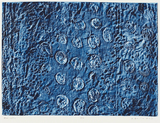
Nakabayashi's involvement with copperplate print began when he learned its techniques from Tetsuro Komai, as a junior at the Tokyo National University of Fine Arts and Music. Most of his early copperplate works, reflecting the period's trend, communicate social messages. In the late 1970s, however, he started to favor natural motifs, such as flowers, plants, and twigs, in his works. This work is based on a photocopied image of the ground. The surface of the earth, which is reduced to monochrome here, fully retains its feel, and is captured as a tangible presence.
This series includes “Spring,” “Summer,”“Autumn,”and “Winter .”Each work, relatively small in size, features seasonal elements, such as spring flowers or dead autumn leaves scattered on the ground. Together, they make up a set of pictures depicting the four seasons, traditionally favored as "Shiki-e in" Japan. While typical sets of "Shiki-e" portray seasonal changes in large pictures which allow depiction of details, these works of Nakabayashi based on photocopies represent the seasons in a style radically departing from the tradition and uniquely his own.
1937-
| Genre | Prints |
|---|---|
| Material/technique | Etching, aquatint |
| Dimensions | 57×49cm |
| Acquisition date | 1983 |
| Accession number | 1975-00-7461-000 |
| Edition | Ed. 37/50(画面内左下、紙面裏) |

1977

1997

1974

1982

1998

1982

1983

1977

1992

1999

ANZAI Shigeo
April 12, 1982
ICHIHARA Arinori
1982

YOKOO Tadanori
1982

KAMATANI Shin'ichi
1982
KAWAMATA Tadashi
1982

David NASH
1982

ANZAI Shigeo
September 30, 1982

ANZAI Shigeo
April 12, 1982

ANZAI Shigeo
June 24, 1982

ANZAI Shigeo
July 3, 1982
